Major League Baseball History: Florida Marlins and Colorado Rockies

In 1983, budding superstar for the Baltimore Orioles, shortstop Cal Ripken Jr., in just his 2nd full season in the Majors, won the American League MVP award. The year prior, he was named the AL Rookie of the Year in a near-unanimous decision, earning 94% of the votes. It was in May of that freshman campaign when ‘Rip’ kicked off his historic consecutive game streak. After sitting out the 2nd game of a doubleheader against the Toronto Blue Jays on May 29th, Ripken was back in the lineup the following day. From a performance perspective, Ripken’s game itself was uneventful, as the 21-year-old went 0-for-2 in the contest. As a team, Baltimore racked up just one hit in the ballgame en route to getting blanked by the Blue Jays, 6-0. Yet, the date May 30th, 1982, will live on forever in the baseball world, as it marked the first of 2,632 straight games that Ripken Jr. would start in. An incredible, unbroken chain of events that lasted almost 16 years. On September 6th, 1995, ‘The Iron Man’ surpassed Lou ‘The Iron Horse’ Gehrig’s previous record of 2,230, and became the all-time leader in the history books. Barring an unfathomable run by a modern-day ballplayer, with the way the game is trending, it’s quite possible that Ripken Jr. will remain the king of the category until the end of time.

Continue reading “Major League Baseball History: Florida Marlins and Colorado Rockies”

Jeremy’s Journal: Pin Collection

Jeremy Bhandari

Before the world turned digital, physical collectibles were king. As mentioned in a prior post, during childhood, to embody my baseball monomania to perfection, I gathered as much MLB-related possessions as possible. From team hats, trading cards, books, magazines, to posters, action figures, and bobbleheads, if the entity represented baseball in any fashion, you bet I had it.

Continue reading “Jeremy’s Journal: Pin Collection”

Jeremy’s Journal: Magical Bobbleheads

Jeremy Bhandari

Circa 2002. Though I was just 6 years old at the time, my obsession with Major League Baseball was already in full-swing. As my level of consciousness evolved at a high rate with each ensuing sleep, so too did my desire to latch onto anything baseball-related. Along with watching the local Red Sox games every night, and scanning the baseball section in the Boston Globe to keep up with the League Leaders every morning, I would beg my mother to gift me all types of physical objects affiliated with MLB. Trading cards, magazines, books, even the McFarlane brand MLB player action figures. If it had any correlation with my prized sport, I wanted it, and by good fortune, I would receive it. Soon enough, I had binders that were chockfull of cards, a mini library of Matt Christopher’s MLB-player focused biographies, an art-show’s worth of player toys, and a stack of magazines that I could scan through to read about my favorite players.

Continue reading “Jeremy’s Journal: Magical Bobbleheads”

Major League Baseball History: The Gaudy Stats From 1994

The 1994 San Diego Padres, as a unit, did not have much to write home about. At the time of the strike, their record was an abysmal 47-70, a mark that ranked them dead last in baseball. Yet, even though their house was dark, appearing to lack electrical power, a lone light shined bright in the living room. The sector in the abode considered to be the “main attraction” possessed an illumined glow that made San Diego fans forget about the gloom. In their last game before the season was stalled, San Diego Padres star right fielder Tony Gwynn collected three hits against the Houston Astros, which raised his league-high batting average to an astounding .394.

Continue reading “Major League Baseball History: The Gaudy Stats From 1994”

Major League Baseball History: The Most Jam-Packed 40+ HR Club (1996)

From 1920-1929, Babe Ruth hit 40 or more home runs in eight of the 10 seasons. In the two years that he missed the mark, Ruth was suspended for a portion of one of them and ill for the other, causing him to miss a significant number of games. By the end of the 20s, just five players not named Babe Ruth joined the 40-home-run club. Though more names added themselves to the elite group that Ruth founded, they came to the party either by themselves or with a handful of others. In 1922, the year Ruth was suspended, Rogers Hornsby hit 42 home runs and stood alone as the sole member of the 40-home-run group that year, thus making his light beam in baseball lore. In 1927, when Ruth hit 60, his teammate Lou Gehrig got in on the fun, clubbing 47 en route to being the only other ballplayer to hit 40 or more that season.

Continue reading “Major League Baseball History: The Most Jam-Packed 40+ HR Club (1996)”

Major League Baseball History: The Mick
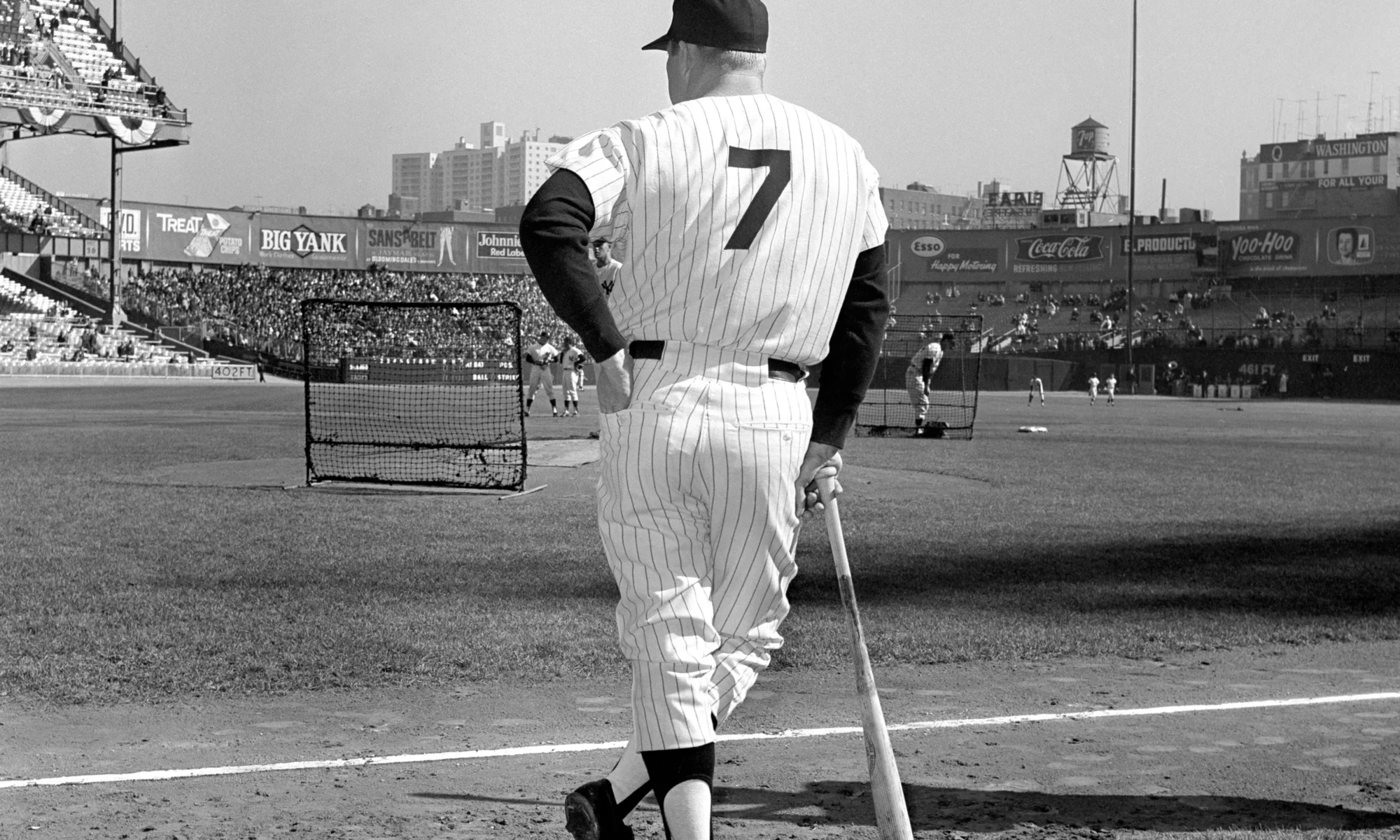
To the plurality of boys growing up in America in the 50s and 60s with an interest in athletics, Mickey Mantle was much more than just a fantastic ballplayer. He was a national icon who represented the American dream in a mythological-like manner—a folk hero with Paul Bunyan-like characteristics. Akin to Bunyan, “The Mick” showcased strength and vitality in his profession, while carrying out a career that was more chimeric in its nature than it was concrete. He grew up in Commerce, Oklahoma, a small town of less than 3,000. His father, Mutt, named him after the Hall of Fame catcher Mickey Cochrane, whose government name, funny enough, was Gordon Stanley Cochrane. Nonetheless, Mutt was set on honoring the ballplayer’s nickname a full two years prior to Mickey’s birth. With that said, even prior to him spawning into this universe, Mickey Mantle was destined to be a ballplayer. “He’s just a plain, big old country boy who liked to play baseball from the day he was old enough to carry a mitt,” said Ralph Sears, the bank president in Mickey’s hometown, via a 1956 newspaper article written by Carter Bradley, United Press Staff Correspondent (Bradley 4).

Continue reading “Major League Baseball History: The Mick”

Major League Baseball History: A Collusion Three-Peat

For those unaware, players, three times, in three straight off-seasons (1985, 1986, 1987), filed grievances against the owners for collusion. After the 1985 season, during the free-agency period, 28 players signed new deals, but only two of them joined new teams. The players, rightfully so, perceived this as “fishy” behavior and proceeded to charge the owners with acts of collusion (later dubbed Collusion I).

Continue reading “Major League Baseball History: A Collusion Three-Peat”

Major League Baseball History: Maddux and the Glove

After his preposterous stretch of dominance in the strike-shortened 1994 season, it appeared implausible for Greg Maddux to follow up his incredible campaign with an even more extraordinary run. Yet, somehow, the man whose introduction to baseball came at the age of four at a barnyard in Indiana where, if a ball was hit into the cornfield, it was considered a dinger, outdid himself. En route to winning his fourth straight Cy Young Award, Maddux led the league in wins (19), W-L percentage (.905), ERA (1.63), complete games (10), shutouts (3), innings pitched (209.2), and WHIP (0.811). On the road, he went a perfect 13-0, with a jaw-dropping 1.12 ERA. This unprecedented feat made him the first pitcher in history to win more than ten games on the opposition’s field without suffering a loss over the entirety of a single season. The man finished with more complete-game shutouts (3) than defeats (2). Just flat-out ridiculous.

Continue reading “Major League Baseball History: Maddux and the Glove”

Major League Baseball History: Dodgers and Yanks

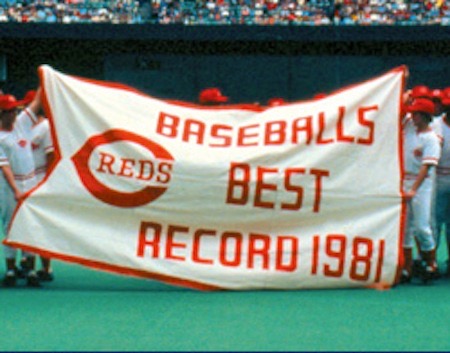
Though the Cincinnati Reds and St. Louis Cardinals got cheated in 1981 (see “1981 Cincinnati Reds Blog”) due to the provisional playoff structure, those captaining the ship positioned the vessel right where they wanted. When baseball’s longest postseason to date reached its final event, the Los Angeles Dodgers and New York Yankees were the last two teams standing. An iconic pair of marquee franchises squaring off on center stage, the 1981 World Series marked the eleventh time in history that the two would meet for the Fall Classic. On average, around 41 million viewers tuned into each game on their television sets to watch the Series unfold, which, according to Baseball Almanac, is the third-most viewers per championship contest since 1973 (“World Series Television Ratings”). In the past, the championship clashes between the two renowned rivals had given the world fantastical events that will live on forever in baseball history.